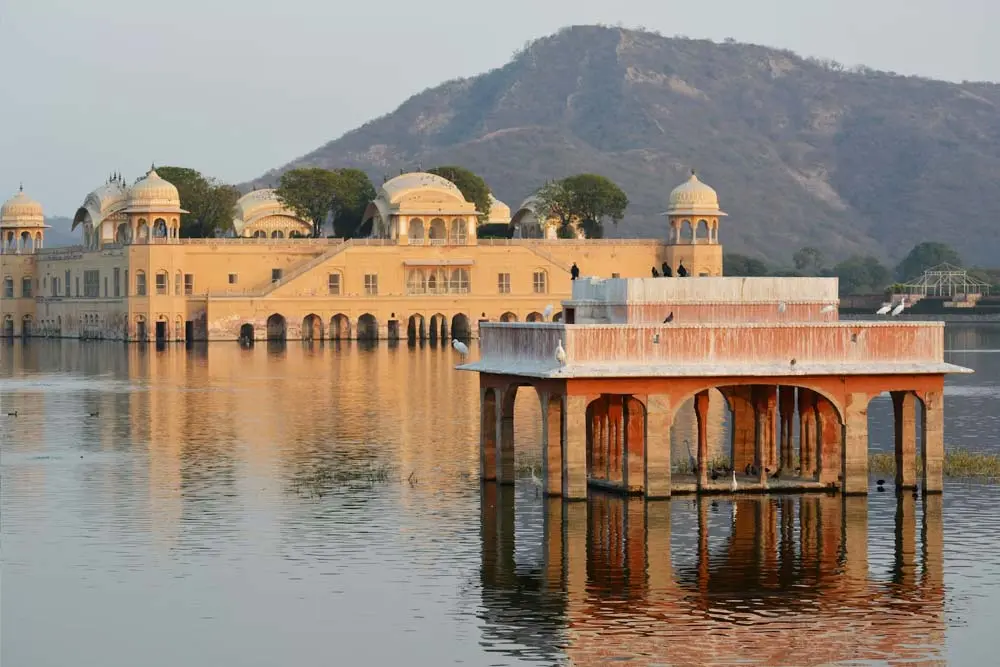
Gracefully set in the middle of
Man Sagar Lake,
Jal Mahal is one of Jaipur’s most enchanting architectural icons. This elegant
water palace, appearing to float serenely on the lake’s surface, reflects a harmonious blend of
Rajput and Mughal architecture.
Built in the
18th century by Maharaja Madho Singh I and later enhanced by
Sawai Jai Singh II, Jal Mahal was designed as a
royal leisure retreat and hunting lodge.
## ⭐
Highlights
• Iconic palace floating on Man Sagar Lake
• Five-storey structure with four submerged levels
• Beautiful Rajput–Mughal architectural blend
• Scenic views of Aravalli Hills
• One of Jaipur’s most photographed landmarks
• Stunning sunset and evening reflections
## 🏰
Architecture in Perfect Harmony with Water
Jal Mahal is a rare example of architecture designed to coexist with nature. Only the
top floor is visible above water, while the remaining levels remain submerged when the lake is full—an ingenious example of
traditional water engineering.
The palace features elegant chhatris, arched corridors, and delicately carved stonework.
## 🌅
A Vision Best Admired from the Shore
While entry inside the palace is restricted, Jal Mahal’s true magic lies in its
visual elegance. Viewed from the lakeside promenade, especially at sunrise or sunset, the palace creates a
dreamlike reflection that captures the romance of Jaipur.
## 🌿
Lake, Light & Landscape
Man Sagar Lake, with its migratory birds and restored wetlands, enhances Jal Mahal’s charm, making the area a peaceful retreat amid the city’s energy.
## 📍
Perfect For
• Photographers and sunset lovers
• Architecture and heritage admirers
• Couples and leisure travelers
• First-time visitors to Jaipur
• Nature and cityscape lovers
## ✨
Why Visit Jal Mahal
Jal Mahal is not meant to be explored—it is meant to be
admired. Its calm presence, scenic surroundings, and architectural grace make it one of Jaipur’s
most poetic landmarks.
Pause, reflect, and admire the floating beauty of Jal Mahal, Jaipur.